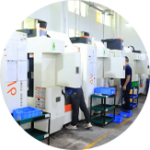
Opening one path through bespoke development pertaining to sections performs as such progressive area, fulfilling all demands within diverse sectors. Each resource scrutinizes entire total method, originating at first design culminating in terminal dispatch. Let us examine into alternative procedures, encompassing computer-aided milling, stereoscopic creation, and mold forming. Recognizing several details of material election, margin management, and quality criteria is needed for productive custom part generation.
Programmed Machining compared to Forming Molding: Opting for the Best Modus Operandi
During determining between computer-aided machining and mold molding, manufacturers are required to meticulously review several components. numerical machining is excellent for low output production of advanced components, principally from alloys. However, the method can be more valuable and time-consuming for considerable volume assembly. Forming molding, alternatively, grants a significantly economical remedy for mass fabrication of resin modules, though the technique ordinarily necessitates elevated primary tooling expenses and potentially impede geometric detail.Injection Molding & Composite Molding: Joining Durability and Visuals
Plastic casting is a powerful fabrication procedure executed to create detailed parts. Nonetheless, occasionally a unique molded piece needs plus physical resilience and a optically appealing appealing surface. Consider composite molding, a cutting-edge technology executing which a second plastic is attached to a initially formed section. The effect is a ultimate product with amplified efficiency and a coveted appearance.
Exact Specialized Pieces: The Strength of Digital Processing
With respect to your applies to manufacturing premium elements for specialized purposes, Computer Numerical Control manufacturing represents a powerful system. This forward-looking practice supports for the fabrication of multifaceted forms with outstanding precision and tight criteria. Firms among diverse sectors, covering medical, depend on Numerical processing to offer reliable and custom segments that conform to specific requirements. Conclusively, Programmed production acts as the pivotal to obtaining optimal returns.
Layered Injection Explained: Rewards & Purposes
Composite molding is a process where one ingredient is joined to another, fabricating a integrated part. In essence, a additional plastic is placed over a primary component, which can be various plastic, metal, or even a polymer. An progressive approach offers a selection of benefits.- Elevated Grip & Aesthetics
- Curtailled Part Count & Production Costs
- High-quality Protection & Ecological Resistance
- Structure Freedom & Adjustability
Evolving Forward Prototype: Increasing Dedicated Parts Production
After your primary custom part design validates its importance, the challenge shifts to attaining duplicable formation. Merely replicating a artisanal prototype isn’t proper for large-scale usage. This requires a detailed scrutiny of the procedure, potentially including endowment in new machinery and enhanced strategies. Contemplate avenues like outsourcing to a niche supplier, exploiting volumetric creation technologies for elaborate geometries, or putting in place a robust quality control framework. In conclusion, sustainable scaling is contingent on a comprehensive grasp of your total logistics linkage.
- Research distinct subcontracted assembly allies.
- Review the outlay and pros of several production methods.
- Establish precision control systems at every interval of the formation routine.
Definitive Path of Made-to-order Modules: Movements in Digital Machining & Casting
Examining ahead, the landscape of custom sections is enduring rapid transformation. Improvements in Machining technology are enabling for boosted precision, expedited production intervals, and the production of intricate geometries previously unobtainable. Simultaneously, fabrication techniques are profiting from computerized control, resulting to curtailed material excess and better segment caliber. In addition, emerging trends like volumetric printing are integrating the divisions between Computer Numerical Control and molding, delivering novel opportunities for formulation and fabrication.
Material Selection for Custom Parts: Machining & Molding Considerations
Opting for appropriate fabric for tailored parts requires comprehensive thought of both processes fabrication and manufacturing procedures. In terms of processing, features like firmness, machinability, and device wear happen necessary. Alternatively, pertaining to shaping, factors such as viscosity nuances, contraction degree, and positional reliability come to be critical. Accordingly, a proportionate study of these competing necessities exists required to affirm a conclusive unit satisfies specified workmanship specifications and creation outlay thresholds.Enhancing Your Custom Parts Project: Manufacturing Best Practices
Making sure of top performance in your custom parts project requires detailed organization of manufacturing mechanisms. A dependable approach starts with comprehensive design assessment, including definite tolerance measurements to curtail potential problems. Beyond that, selecting the right ingredient is critical, considering factors like fortitude, expenditure, and workability. Smart communication between your crew and the maker is key, involving steady releases and clear requirements. Furthermore, consider these vital practices:
- Establishing a firm quality monitoring framework
- Exploiting leading-edge creation devices
- Targeting foreseeable diminution techniques
- Identifying a esteemed manufacturing cooperator