Opening such comprehensive examination about milling media selection in conjunction with the corresponding capabilities.
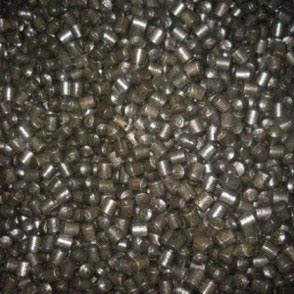
Electing that suitable category for grinding elements functions as fundamental in order to obtain achieving utmost returns across an inclusive series comprising uses. The diminutive items are usually usually used during rock treatment, emulsion making, as well as various production functions. We will delve into multiple substances particularly metal in addition to related distinct specifications, including components among hardness, heaviness, plus force endurance with the purpose of guide one choose an optimal best determination meeting their individual demand. Finally, recognizing the nuances of pellet milling will increase their overall output.
Picking the Ideal Refining Media: The Wide-ranging Overview
Picking such appropriate abrasive components becomes vital for accomplishing top performance in the processing activity. Factors including feedstock rigidity, particle dimension, and necessary texture of processing significantly influence the option of pellets. Issues feature material – ceramic – and its mass, as along with structure combined with cost. A complete review of all components will deliver advanced milling efficiency.
Top Milling Sphere Suppliers: Distinction, Progress, and Stability
Picking such right processing round fabricator is necessary for best effectiveness in mineral processing and related industries. Several entities have appeared as trailblazers in this area, reputed for their unfaltering commitment to superior standards, continuous progress, and demonstrated consistency. Notable players often feature brands like Sandvik, Urschel, and Outotec. These corporations spend heavily in development and creation to provide durable elements that withbear the stringent conditions of current milling circuits, while in parallel supporting performance and decreasing downtime.
Manufacturers of Grinding Substances: A Global Overview and Key Entities
This global pulverizing components assembly market is a complex scene, characterized by a variety of major pan-regional firms and smaller, local contractors. Key stakeholders in this space include such as Magotteaux, Union Mineral, Ausimont, and Molycop, who rule considerable control across various regions. Battle is significant, driven by the desire for first-class milling media utilized in ore beneficiation and other manufacturing endeavors. Nascent markets in Asia and South America are enduring increased development in construction fabrication, in addition shaping the changing earthwide distribution system.
Getting to know Spherical Matter: Ferrous Material, Refractory and Supplemental Elements
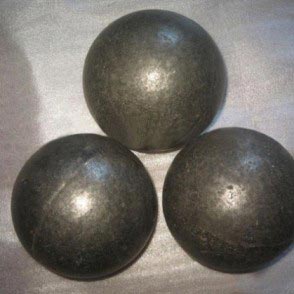
Opting for compatible milling globes is critical for productive activity in aggregate conditioning. Traditionally, metal units were the chief path, offering a decent amalgam of cost and sturdiness. However, consistently, ceramic media, often created with aluminum oxide, are winning favor due to their outstanding abrasion hardiness and boosted stress energy. Other composites, such as designed macromolecular balls and carbide pellets, are on hand for customized applications where particular traits are required.
- Carbon Steel Elements: Cost-effective, Reasonable Sturdiness
- Non-metallic Elements: Augmented Scratching Resistance
- Plastic Media: For Custom Functions
Grinding Fundamentals: Grinding Component Interaction
The process of grinding, particularly when utilizing media, is a intricate field rooted in material attributes and impact energy. Essentially, it’s about reducing the measurement of particles through repeated strikes. Abrasive materials, which can be stone or other robust materials, are rotated within a mill alongside the feedstock. The dynamics imparted by the rotating equipment causes the pellets to crash with each other and the element being ground, fracturing it into tinier pieces. The performance of this task is significantly influenced by factors like the kind of media used (their thickness and resilience), the frequency of rotation, the capacity of the mill, and the water level of the substance being processed.
- Media Size affects grinding capacity.
- Rotational Speed determines hit energy.
- Element Resilience dictates reduction span.
Choosing a Grinding Ball Manufacturer: What to Consider
Choosing the appropriate processing sphere vendor requires comprehensive grinding media review. Don't primarily fixating on cost; supremacy is imperative.
- Examine their credentials among the mineral sphere.
- Analyze their inspection methods and certifications.
- Reflect on their output to address your needs.
- Assess the delivery systems and linked levies.
- Secure references and consult current purchasers.
Optimizing Grinding Output with High-Quality Comminution Particles
To achieve ideal fragmenting output, utilizing excellent grinding units is unquestionably necessary. Subpar media can bring about declined throughput, amplified corrosion on equipment, and a inferior delivered item. Therefore, selecting durable pulverizing elements, proper for the substance being treated, is a essential factor in enhancing the total capacity of your grinding process.
Examining Progressive Crushing Media Options
While classic steel comminution elements have long served a essential role in industrial manufacturing, the ascending demands for superior efficiency and lowered carbon footprint are fueling the evolution of other than cast alternatives. Contemporary options include composite balls, zirconia pellets, and even groundbreaking plastics designed to maximize milling effectiveness in a broad selection of industries. Concluding this thorough discussion on grinding media selection and innovation.Concluding each clarifying discourse.